Minnesota’s winters are notoriously harsh, with average annual snowfall ranging from 54 inches in the Twin Cities to over 70 inches in northern regions.
This heavy snow, combined with rapid temperature fluctuations—where days can swing from above-freezing warmth to subzero cold—creates unique challenges for infrastructure resilience. Winters have warmed by about 3°F since 1895, with the coldest months heating up fastest, leading to more frequent freeze-thaw cycles. These cycles often happen quickly before water has the chance to drain away naturally. (https://climate.umn.edu/MNclimate)
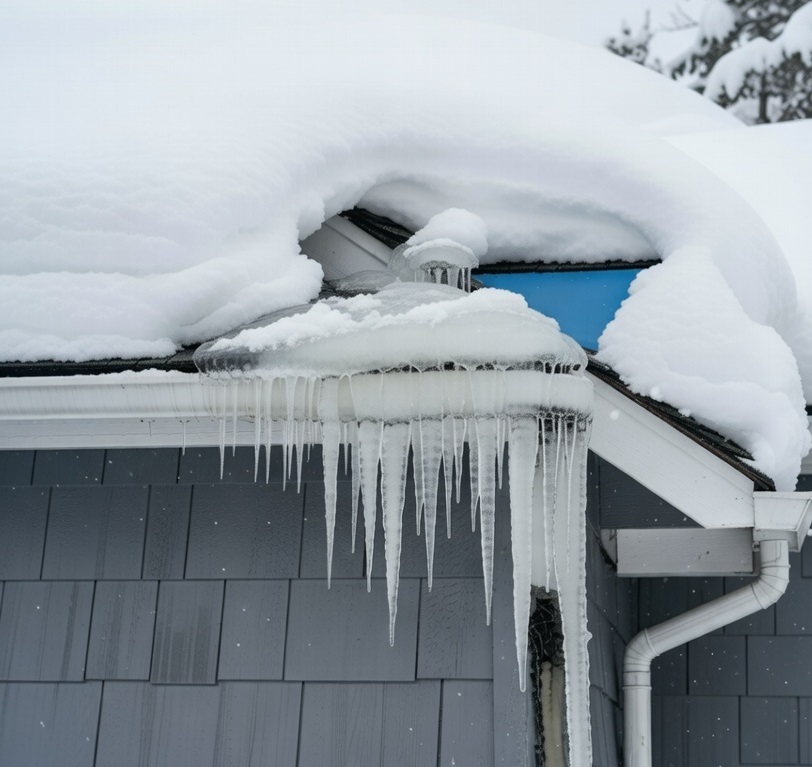
These swings exacerbate issues like ice dams on homes, where melting snow refreezes at roof edges due to poor insulation or ventilation, trapping water that seeps indoors and causes moisture intrusion, mold growth, and structural damage. damage. (https://extension.umn.edu/protecting-home-rain-and-ice/dealing-and-preventing-ice-dams)
Inadequate attic insulation allows heat to escape the interior space and warm the underside of the roof sheathing. This unevenly melts the rooftop snow, while quick cold snaps solidify the now-melted snow into an ice barrier.
For homeowners, this underscores the need for proper ventilation systems and insulation upgrades to prevent costly repairs. These weather patterns extend beyond residences to public infrastructure, as seen in the 2024 Rapidan Dam flooding in Blue Earth County. Heavy rains and snowmelt caused partial failure, eroding the riverbank and destroying nearby structures, highlighting vulnerabilities in aging dams to extreme events. (https://www.blueearthcountymn.gov/1588/Future-of-the-Rapidan-Dam)
The incident’s long-term impacts include bridge demolitions and rerouted traffic, emphasizing the role of resilient design in flood-prone areas.
Small
Smalscale and forensic engineering firms like Martin Design Group play a vital role here, offering specialized assessments to identify weaknesses—such as poor ventilation in buildings or inadequate drainage around foundations — that reduce durability during freeze-thaw conditions. Our investigations can help scope durable repairs. By drawing lessons from observed failures during our inspections, we can help ensure cost-effective, long-term solutions tailored to the Midwest’s extreme climate. Ultimately, this better prepares our infrastructure to remain resilient and reduce long-term emergency repairs. Whether insulating homes against ice dams or having an assessment done on the building systems, Martin Design Group can help be proactive to safeguard our critical infrastructure and safety in the face of weather extremes.